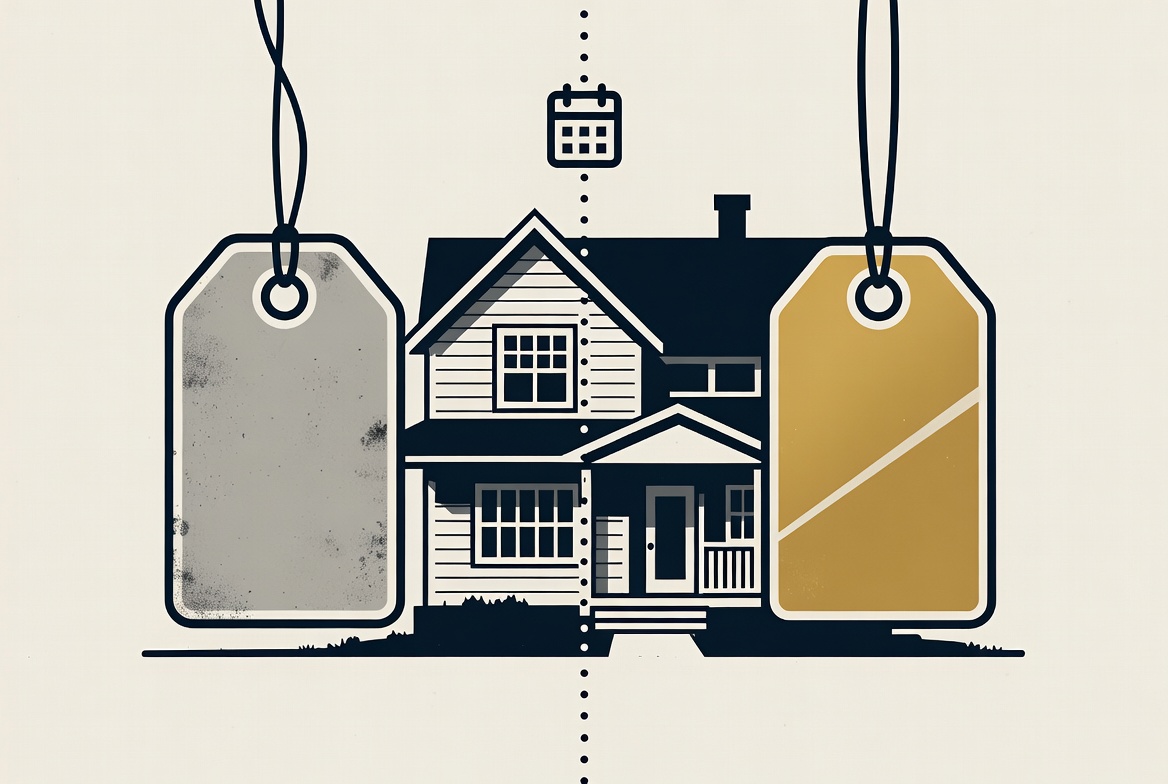
Your property assessment and a lender's appraisal are answering two completely different questions — and mixing them up is the single most common reason homeowners get blindsided at financing time.
Every January, Nova Scotia homeowners open an envelope with their tax assessment and see a number. Every time someone refinances or buys, a lender orders an appraisal and gets a different number. Almost every week, a client asks me some version of the same question: "My assessment says my house is worth $410,000 — why is the bank only working with $365,000?"
The short answer: because those two numbers were never trying to measure the same thing.
What an Assessed Value Actually Is
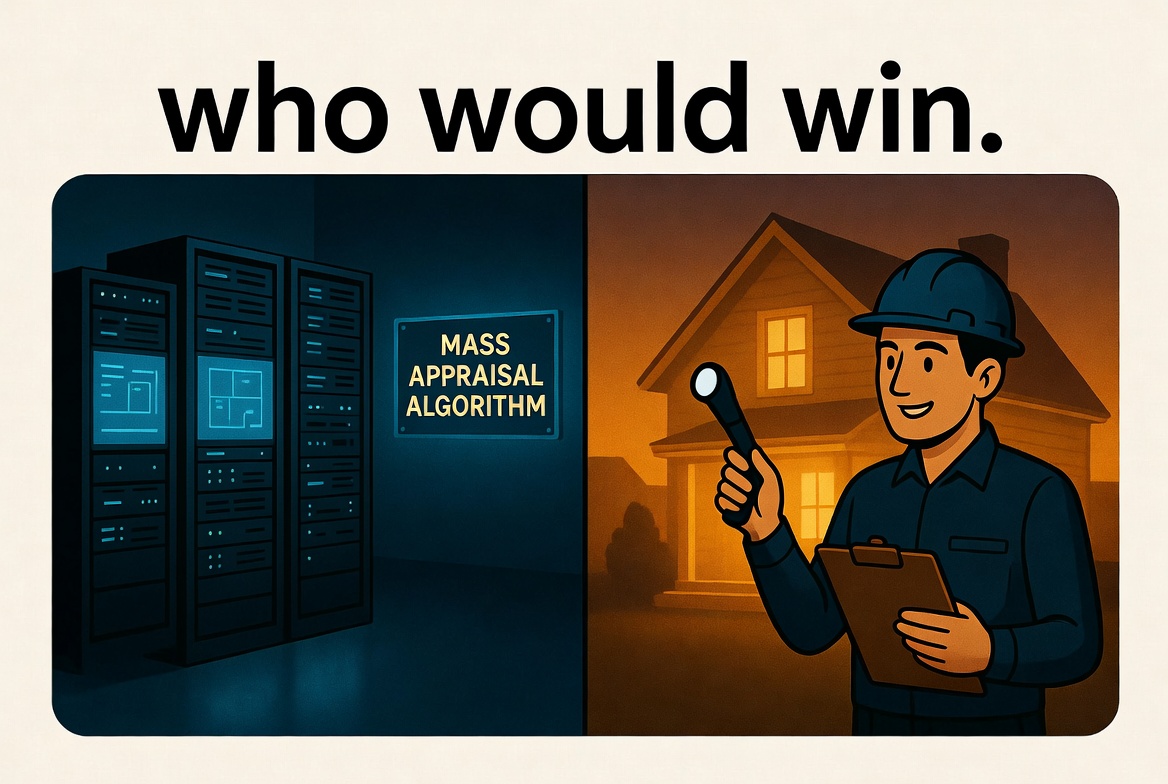
In Nova Scotia, your tax assessment comes from PVSC (Property Valuation Services Corporation) — the province's independent, not-for-profit assessment authority. Their job isn't to tell you what your house would sell for today. It's to fairly distribute the municipal tax bill across roughly 650,000 properties in the province, using mass appraisal: a computer-driven process that values large groups of properties at once using sales data, lot size, age, and general characteristics.
Two details matter a lot here, and almost nobody reads their notice closely enough to catch them:
- It's already a year old by the time you read it. Your 2026 tax assessment reflects market value as of January 1, 2025 — not today. In a market moving quickly in either direction, that lag alone can be worth tens of thousands of dollars.
- The number on your tax bill usually isn't even that number. Nova Scotia's Capped Assessment Program limits how much your taxable assessment can rise each year (2.6% for 2026), regardless of what your home is actually worth. So most owner-occupied homes carry two different figures at once — the assessed value and the lower capped value — and neither one is a live market number.
Nobody inspected your kitchen renovation. Nobody walked your basement. It's a formula applied to your neighbourhood, not an opinion about your specific house.
What an Appraised Value Actually Is
An appraisal is the opposite kind of number in almost every way. It's a professional's opinion of market value, prepared for one specific client, one specific purpose (usually your mortgage), and one specific date — today, or close to it.
A real appraiser physically inspects the property, pulls genuinely comparable recent sales, and adjusts for the differences between your house and those sales. Their signature carries professional liability. If they get it materially wrong, there are real consequences for them — which is exactly why lenders trust the number.
Who's Actually Qualified to Give You Which Number?
| Role | Who does it | What it's for |
|---|---|---|
| Assessor | PVSC assessors (Nova Scotia) / MPAC assessors (Ontario) | Fair distribution of property tax |
| Appraiser | AIC-designated: CRA (residential, up to 4 units) or AACI (all property types) | Mortgage financing, purchase/sale decisions, estate and legal matters |
Some assessors hold appraisal designations too — but when they're producing your tax assessment, they're acting as an assessor, not an appraiser, and the number reflects that role.
So How Big Is the Gap, Really?
Nova Scotia's lag is a manageable one year. Ontario homeowners have it worse: MPAC's province-wide reassessment has been postponed repeatedly since the pandemic, so every Ontario property tax bill in 2026 is still legally based on a January 1, 2016 valuation date — a full decade of appreciation (or in some pockets, decline) that simply isn't reflected in the number on the notice.
In a rising market, assessed value usually runs below what a lender's appraisal will show. In a cooling market, it can run above it — which is the scenario that catches people off guard, because they assume the "official government number" must be conservative.
Because there's no inspection behind it, no comparable-sale analysis specific to your property, no effective date that matches your closing, and no professional liability standing behind the figure if it's wrong. For a loan secured against your house, that's not nearly enough to lend on.